A Unified Vision for Work Management
Challenge: The Fragmentation Tax
As Intuit expanded its offerings across QuickBooks, Mailchimp, and TurboTax, a significant efficiency tax emerged. Every product team was independently building "task" and "project" features, leading to a disjointed user experience and massive engineering redundancy.
The Disconnected Workflow: Research showed that users—ranging from solo entrepreneurs to mid-market firms—felt the friction of managing work across different Intuit tools that didn't "speak" to each other.
The "Feature" Trap: Internally, work management was viewed as a secondary feature of individual products rather than a foundational platform capability.
Strategic Deadlock: While there was a desire for a "one task management platform," the organization lacked a unified design framework and an operating model to execute it across multiple business units.
Solution: Architecture of a Unified Capability
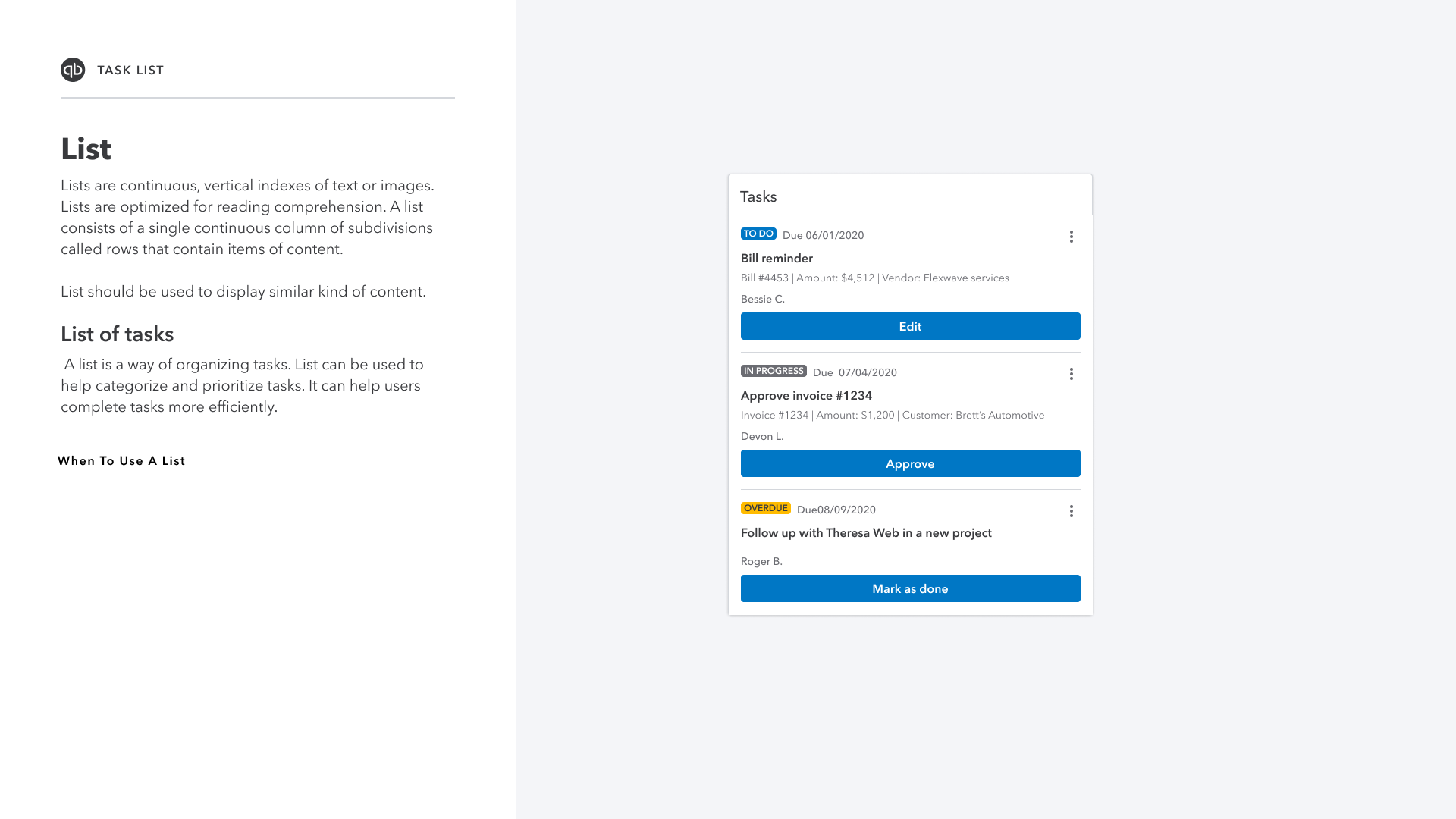
I led the design initiative to transform work management into a Tier-1 (L1) Platform Capability. I bypassed the siloed development approach by architecting a universal system that provides a single "engine" for tasks and projects across the entire Intuit ecosystem.
The "One Engine" Vision: By defining IPTM as a centralized capability, I moved the conversation from "adding a task list to a page" to "building a work management infrastructure."
Strategic Alignment: I utilized D4D (Design for Delight) sessions and constant check-ins with QBX Leadership to align product and engineering partners on a common capability map, securing the mandate for a unified platform.
Pillars & Framework Solutions
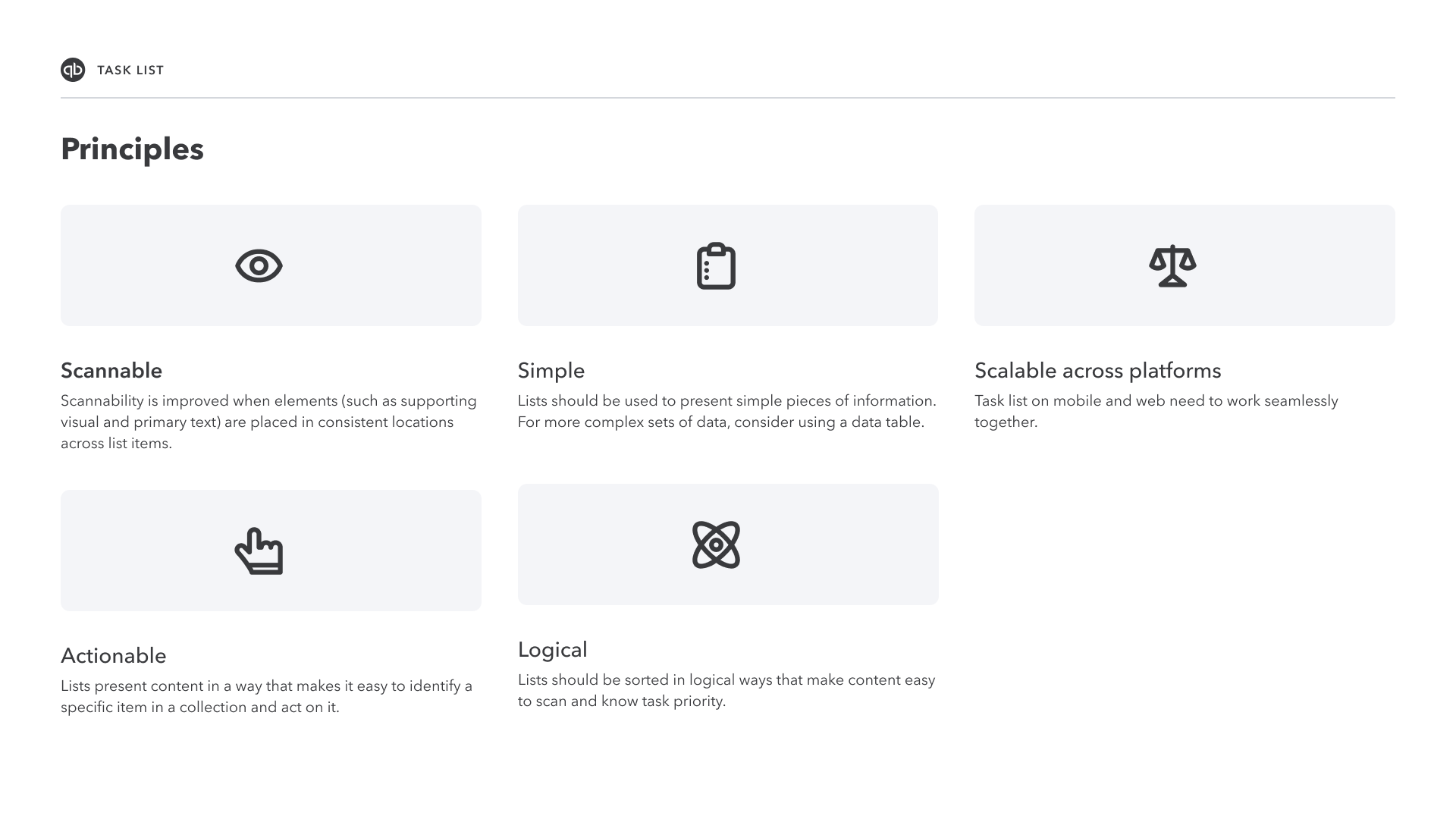
1. Universal Design Principles
I established a set of core principles to ensure that while the backend was unified, the frontend remained intuitive and consistent regardless of the product context.
Scannable & Actionable: Standardized placement of primary text and visual supports allows users to identify and act on items instantly.
Simple over Dense: Optimized for reading comprehension; complex data sets are intentionally deferred to secondary views to avoid cognitive overload.
Logical Mental Models: Implemented sorting and prioritization logic that mirrors how small businesses actually manage their productivity.
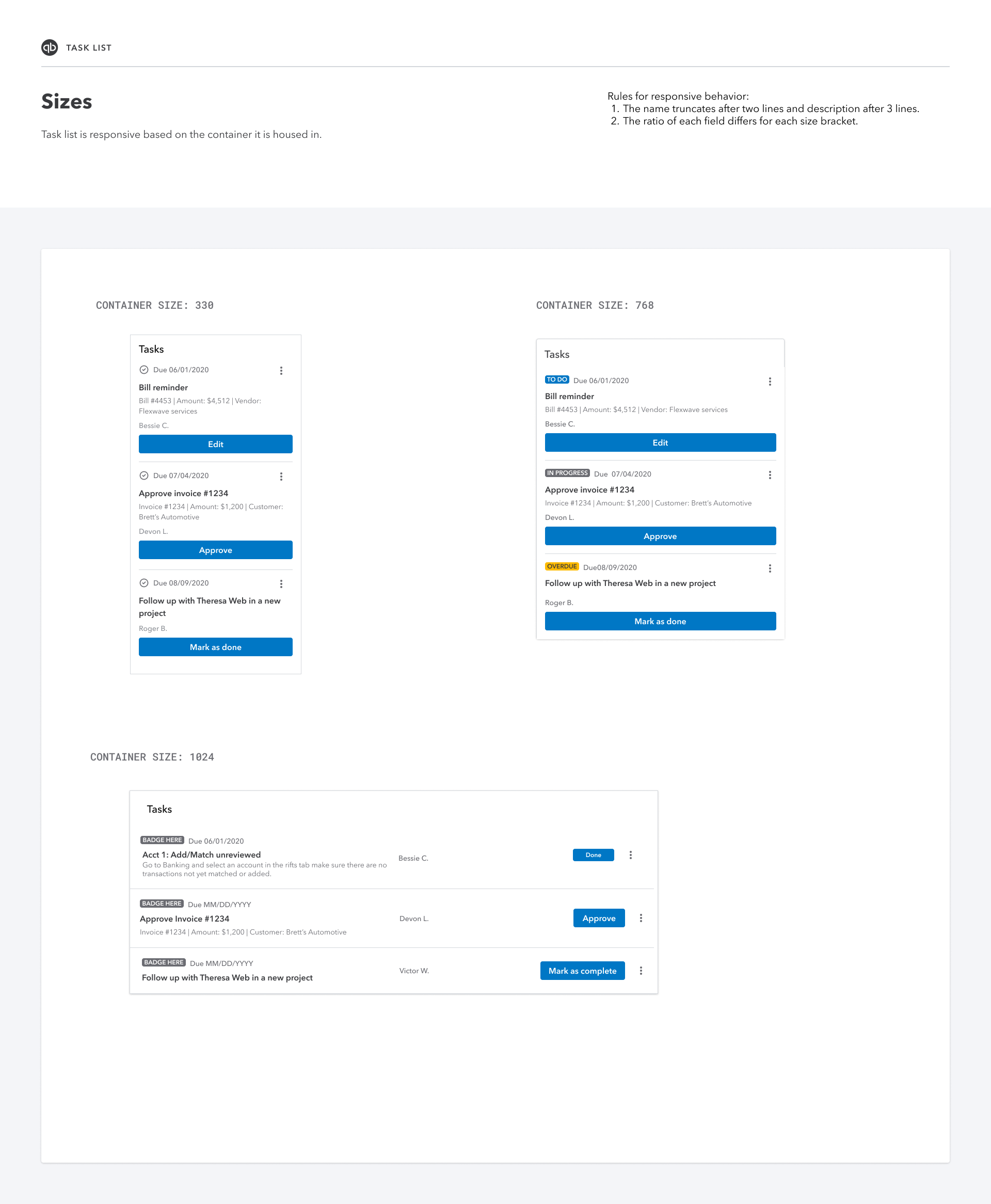
2. Responsive & Resilient Component Architecture
I delivered a robust library of "plug-and-play" components currently in development, focusing on universal utility.
The Responsive Matrix: I codified behavior for three primary containers (330px, 768px, and 1024px), ensuring the UI is functional in sidebars, tablet views, and full dashboards.
Resilience Specs: I designed comprehensive specs for Empty, Loading, and Error states, ensuring a high-quality "non-happy path" across all Intuit SKUs.
3. The Design Working Model (Operational Architecture)
As a Staff Designer, I recognized that a system is only as good as the team's ability to use it. I architected the IPTM Design Working Model to solve the "centralized bottleneck" problem.
Defined Scenarios: I created three engagement paths: Scenario A (utilizing existing components), Scenario B (co-designing shared extensions like "Recurring Tasks"), and Scenario C (partner-led contributions).
The DACI Framework: I established clear governance where the IPTM team owns common UI/Services, while Offering teams own the end-to-end user experience.
4. Multi-Market Discovery & Roadmap
I bridged the gap between academic project management theory and practical user needs for Small Business and Mid-Market segments.
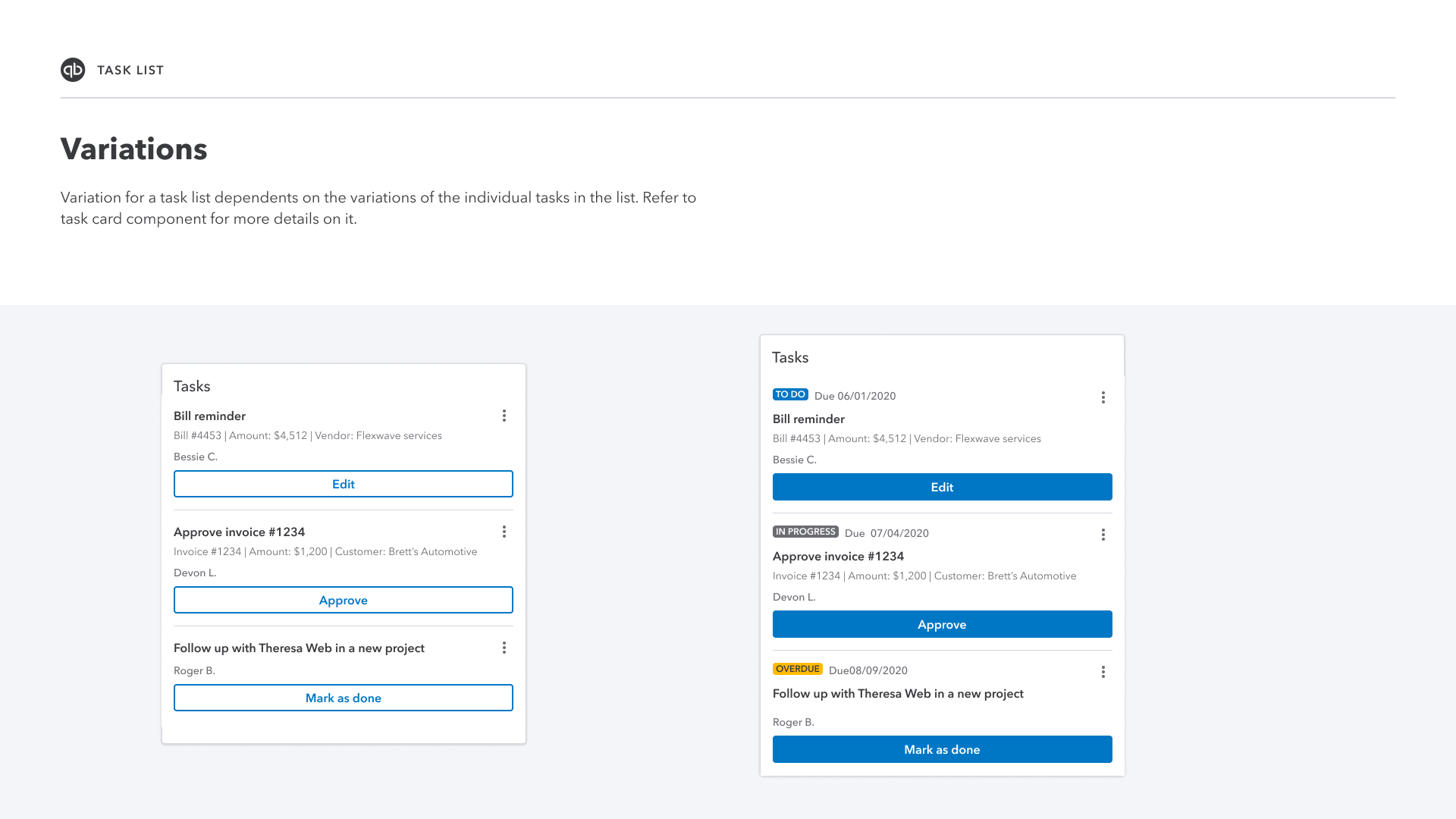
Roadmap Leadership: I drove the FY23 Development Roadmap (Core services/widgets) and laid the groundwork for the FY24 Discovery Roadmap, which focuses on advanced features like Project Templates, Custom Fields, and Portfolio Health tracking.
Design Leadership: Scaling through Partnership
I didn't design in a vacuum. I established a relationship-building model that allowed IPTM to scale through collective effort.
Cross-Ecosystem Influence: I drove the vision across SBSEG (all QBO SKUs), Mailchimp, Intuit Practice Management, QBOA, Mint, and TurboTax.
Constant Validation: I maintained constant touchpoints with offering team design partners to ensure our components evolved to solve real-world problems for their specific users.
The Impact
Improving Visibility: Delivered core analytical functionality that empowers users to understand their entire workload through portfolio-wide data and anomaly detection.
Streamlining Workflows: Enabled teams to generate portfolio-level dashboards faster, aiming to reduce discovery-to-execution cycles from multiple quarters to just two weeks.
Empowering Leadership: Provided clear views of portfolio performance to enable proactive decision-making aligned with Intuit's long-term vision.
Ecosystem Growth: Surfaced ecosystem data to help users utilize other Intuit products more effectively, directly improving product penetration and expanding adoption to 15+ offering teams.